 Read the girls-seek-counselling columns on a Sunday tabloid page. A sex expert churning advices that guide the 'starved' , the underly-privileged about the possible ways to screw. Urging the not so matured populace of the teens to quench their biological thirsts. Anyway, the parameters that distinguish the good from bad, separate the moral from immoral and propel the evil from crossing the line of the virtuous; have been tampered with. Read the boys whispering their anxieties about the girl not heeding their overtures. On any given Sunday morning you easily find such newly emerged trends, given space in an attempt to get these aspirants the right target. These papers forget their very own work of informing. These are a few sad, sickening pleasure achieving gimmicks adopted to relieve the 'starved' of the previous week's stress. Alas, the tricks then published in the form of the tips never help the girls or the boys to attain their sole goal to attach their target to a non existing string. Strings attached to many bodily parts fail to guarantee an unbreakable bond. The purpose to pen this article is neither to spread the moral education nor to pull the legs of those who indulge themselves freely to get the biological spurs satisfied. It's rather to amend the way the end of the week usually is spent. So guys have a break that does not shatter the weak end. Don't make it a week end folks...
Saturday, April 16, 2011
A break at the weak-end that shatters...
Read the girls-seek-counselling columns on a Sunday tabloid page. A sex expert churning advices that guide the 'starved' , the underly-privileged about the possible ways to screw. Urging the not so matured populace of the teens to quench their biological thirsts. Anyway, the parameters that distinguish the good from bad, separate the moral from immoral and propel the evil from crossing the line of the virtuous; have been tampered with. Read the boys whispering their anxieties about the girl not heeding their overtures. On any given Sunday morning you easily find such newly emerged trends, given space in an attempt to get these aspirants the right target. These papers forget their very own work of informing. These are a few sad, sickening pleasure achieving gimmicks adopted to relieve the 'starved' of the previous week's stress. Alas, the tricks then published in the form of the tips never help the girls or the boys to attain their sole goal to attach their target to a non existing string. Strings attached to many bodily parts fail to guarantee an unbreakable bond. The purpose to pen this article is neither to spread the moral education nor to pull the legs of those who indulge themselves freely to get the biological spurs satisfied. It's rather to amend the way the end of the week usually is spent. So guys have a break that does not shatter the weak end. Don't make it a week end folks...

Monday, April 11, 2011
Celebrities and the basic diplomatic instinct...
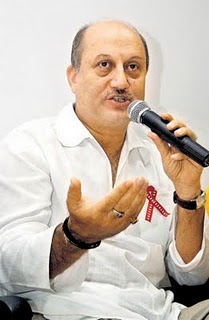 Salute the celebrities. For their impeccable diplomatic instincts. Every time a brawl erupts, the men and women of fame and fortune and couture deny the charges to their hilt. Look at the news spaces and the broadcast times. They all are predominantly occupied by the celebrity tete-a-tete. A big part of the so called news items are dominated by denials and censures. And the presenters to these "bought spaces and purchased times" are preoccupied by the craze to pursue the stars' stardom to cash in on; with an aim to increase the TRPs and the circulation. But what takes it to be in a vantage position to simply wash one's hands of the controversy triggered by the celebrity disputing utterances? A sneak peak into the recent denials and censures can remove the lid of the bottle subsequently releasing the genie. Anna Hazare should boast of the influence he has had on the stars' psyche; one among them is the selective, the shrewd and the choosy Bollywood superstar. Aamir Khan went a step further ahead. Mr perfectionist as he is known among the film circle dashed a letter off to Prime Minister Dr Manmohan Singh. Anna Hazare could never have found a better supporter than in Mr Perfectionist himself. Turning towards the peg of our article. Celebrity controversies are not new. From the likes of Rakhi Sawant to the 'highly professional' Malika Sherawat the list goes on. On occasions these famous figures face threats, particularly to their properties, from unscrupulous elements. Take the recent take of Mr Anupam Kher on corruption take. Kher allegedly dig his own grave by uttering 'something bad' about constitution. The Maharashtra legislative assembly wasting no time has passed a 'breach of privilege' motion against Kher. Besides the speaker of the house has instructed the home department to look into the whole episode; and if need be put Kher behind bars. The denials and the excuses come when the 'alleged perpetrators' experience the ground slipping from under their feet. Kher has retracted. He has denied and blamed the misinterpretation of his statement responsible for the 'unnecessary brouhaha'. The recent incontrovertible controversy has a lesson or two, at least for the writer. The celebrities are born with superb denying instincts with which they easily emerge out of any situation. So, why not push their names forward for the upcoming assembly elections?
Saturday, April 9, 2011
It's not a you-blink-first game...
 At last. Those at the power Centre breathe easy. Thanks to Anna. He has ended his fast unto death. After the government's assurance to set up a ten-member joint committee to draft a robust Lok Pal Bill, it seems that the government has bought its own time. Let's see at the developments through the prism of common men. See the kind of response Anna's campaign or movement or agitation has received. Youngsters, professionals, film actors and the most respected among them; the people of the country. But why it took four or maybe five days to come up with a proposal on the 'embattled' Lok Pal Bill? The procrastination puts a large question mark on any government's seriousness on an issue. If those ruling the nation fail to curb people's outburst rather to pacify the people's angers, they loose all the rights to rule. Look at the way things were being handled at the power corridor, while our very own people; especially Anna, were nearing fragile health. It's a universally accepted truth that after the storm come the fake claims from the non-performing actors who never miss a chance to grab the credit; for the work they did never undertake. As the fast has ended, news prints and broadcast space have been chock-a-block with 'eye-catching' headlines. "Government blinks first", "Anna wins" etc. We the people are surrounded by vampires who surface every time the sun sets. The country faces serious crises which need to be taken care of with utmost attention. Peoples' movements start after they are deprived of their share that helps them lead a decent life. Look the people filled with the 'unrest', venture out on the streets; shouting slogans in support of a tangible change. A change that can bring accountability and every adjective connected with good governance. So let's treat the "Jihad" against corruption as a means to bring transparency. Please don't portray the anti-corruption movement as you-blink-first game...
Tuesday, March 29, 2011
Don't play badminton, play cricket!

India and Pakistan clash again. In peoples' psyche, not on the battelfield. The boys are face to face to send the ball all over the way to the rooftop. To raise their pitch of the voice, not in hatred; but in an attempt to pack the batsman back to the pavillion, got out after a collective LBW appeal. Cricket is not like tennis or badminton. Where the ball keeps moving from one court to the other. Tennis ends the spectators up in awe, as they pursue the ball from one court to the another. With every shot that sends the ball to the 'another' court players think loudly in their mind "the ball is now in your court". So play cricket. It helps thwart any attempt to find excuses.
Thursday, March 24, 2011
Now the government activism...

The talk of the judicial activism seems to have died down. These are the times of peoples' movements. Any attempt on government's part to suppress the voices probably proves to be suicidal. Recently the temples in Maharashtra were at the receiving end. The state sees the distribution of prasad to devotees as a 'taxable asset'. So yet another attempt to commercialise a spiritual entity known as faith. Indian populace lives with a serious religious attachment in its every sphere. The reason why the cricket has become almost a prayer is obvious. Every year the governments formulate the budgets. Incorporating and picking hosts of things up to bring them under the tax umbrella. Seems the taxable things have ended. Revision of the prices of crucial commodities lies at the front at the end of every financial year. The two per cent educational cess has already put extra burden on the wallets, though the concerned government brought it with an eye to improve the public health; luckily or unluckily the move attracted a warm welcome from a specif stratum of society. Social activities and the day-to-day proceedings at the law making bodies hardly have anything in common. Men, women and children are the bunch who leave no stone unturned to find a day away from the hustle and bustle. So keep spirituality aside. And, don't contaminate it with the government activism...
Friday, March 18, 2011
Ministry of Denials and Censures...
 There shold be a Ministry of Denials too. Why not? Another portfolio, for sure, is not going to be a burden on the ex-chequer; given the back to back scam exposures. Prime Minister defends again. This time he talks about the compulsions. In a coalition politics the ruling party has to give in the demands. But why subject the government to the uncalled for 'blackmails'. It puts a big question mark on the motives of a PM known for his true administrative ethics. Legitimate or whatever, the demands should be put under litmus test. The Wikileaks exposures have turned out to be more dangerous than a nuclear war. Its impacts have stirred the hornet's nest. The diplomatic repurcussions could trigger severed ties. But why the UPA struggles to cosy up to the unrelenting opposition? The answer maybe in the ongoing 2G probe. After every crisis a series of denials and censures arrives. In the era of coalition politics the PM no longer acts as the head of the government. He serves as the head of the parties. Pacifying their anger. Gone are the days when India had robust governments and suo moto government heads. The need of the hour is to give more space to the PM. He already has the teeth. But he lacks the bite. So let the PM have the bite. Make the country climb up.
Thursday, March 17, 2011
An uninterrupted journey to humanity...
 It has been ten years. Since the desire to assist the poor stirred Professor Kazi. An erstwhile Bombay Municipal Corporation member and veteran philanthropist. His stint as a dean of Arts at Bombay University earned him the repute of an astute academician. Not satisfied with his works and activities, he took upon himself, the responsibility to reach out to the needy. Professor Kazi, far removed from other sicio-economic activists, started on an unending journey. To aid and assist the cancer patients. His dream to to help the poor cancer patients turned out to be a reality on June 20, 2001. And, the Cancer Aid and Research Foundation (CARF) was born. Since then the CARF and its pioneer did not look back. In a decade old journey CARF has assited many a poor cancer patiens without partiality. The CARF has since been the proved to be refuge for the homeless, the needful and the underprivileged who cannot afford the treatment. Apart from assisting financially, CARF also distributes medicines from its own pharma company. The CARF owing to its larger interests has drawn veterans from differnt walk of life to its threshold. Many celebrities promnote CARF in terms of money and helping through other means. In the tenth year, CARF has developed a great network of people who always like to aid, assist and empathise with the poor. The journey goes on. Professor Kazi has not looked back. CARF goes on to see places. Let's pray the primary goal to assist the poor is met.
Tuesday, March 15, 2011
A cause to spread hope...

Cancer Aid and Research Foundation wears on its sleeve what it preaches. Reaching out to the needy cancer patients and supplying them with the requisite medicine has been extraordinary task done by the CARF.
Monday, February 21, 2011
It's not legal to love...

There is only one thing which has been under misuse. Extensively. The freedom to practise assorted rights. Quite common in India too, the gay rights, gay-rights-activism has grown by leaps and bounds, over the years. The advoactes of these so called 'sexual minority' and their rights have one thing in common. To obstruct the vehicular raffic. To show the strengths. But even they themselves don't knw what they are propagating! The same sex, gay sex, women to women sex etc...It sounds horrible and inhuman to think about these 'unnatuaral offences'.
Okay we accept. Human beings and their inclinations. They have bilogical urges. But what about the rules and regulations? Large chunk of world's population; the writers, intellectuals, academicians, musicians, teachers and doctors, whether they are atheists or believers, firmly believe that the animals have no set rules. The animals, they start it in the streets and bring to its logical end to the open. In between, they traverse distances. While they travel during their 'deed' the scen becomes quite unbearable to everyone. So where has the human values disappeared?
We as human beings never come out in the open. Has anyone the guts to do it in the open? The rights activists should better answer the question. The 2009 Delhi High Court judgement should be seen as a judicial pronouncemnt. Why these activists have generated so much of noise? It's ridiculous. On April 19 the apex court will decide its stand on the unnecesary brouhaha and the demand to repeal the IPC 377. We ask these rights groups what really ails them? The Indian social structure has been marred by many factors. By initiating the caus ethey have further damaged the social fabric. Is it necessary to grant sanction to is sexual minority? Or the society itself needs to be quarantined from them? the debates continues...
Tuesday, February 15, 2011
Han ji it's 2 G...

It's 2 G. The second generation scam. Superbly evolved, over the years. Even Mr Charles, not the Sobhraj fame, would have inferred from it. To support his popular evolution theory. No no. Don't misunderstand. The 2 G spectrum and its intricacies bear all the signs. Of evolution. But in this case they refer to the 2 G scam. Its evolution over the years. we hear that the scam indeed occurred during erstwhile NDA. The DNA of 2 G virus, it seems, has become resistant to the remedies. At this stage the probe by the Central Bureau of Investigation can be considered only as an effort to quarantine. Should not be taken as the inoculation. The parliament proceedings have too been contracted by the 2 G DNA. Orchestrated by the opposition led by NDA. What if the scam was exposed during NDA regime? Would the pandemonium been the same? Maybe. Because our political class has one characteristic in common. While in opposition, they have a pre-studied lesson. Someone might have taught these leaders. That, obstructing the parliament sessions will make them a leading name. In political circles. The more they gather into the well of the House the more they send their rivals to the hell. We hear that CBI has summoned Arun Shourie who lives in Lavasa. The upcoming state of the art township near Pune. Hope that it's not built on the art of staging the displacement, of the poor. The seeds of the scam were sown during the rains of NDA; still not proven. Mr Shourie has vindicated himself in an interview to Sunil Jain, opinions editor, The Financial Express. So what? It's a self written clean chit. CBI needs to unearth more. It needs to till the soil. Then the worms will come out. These worms have eaten into the ex chequer. The public money. The farmers' money. The poors' who live by roadside and construct huge high rises. Though they have survived the high rising prices which have crashed down on to them. COming back to Mr Shourie. He on various occasions our maybe he created those occasions to meet Manmohan Singh, our beloved prime minister. "Something is going wrong Mr Prime Minister" in the words of Shourie. Then nothing happens. The worms indulge in their under ground play. Then Mr Shourie buzzes Ashwani Kumar. The hell breaks loose here. In India whistle blowers are silenced. Not the ones who wreak havoc on the girls on the roads. But the government real servants who against the traditional jeevo aur khane do mantra. And end up in graves or on pyres. So is Mr Shourie a whistle blower? CBI has better tools. Even the sleepless nights are missing from the scene. Look at Raja when he is being taken to and from court? A look at Shahid Balwa will outrage common men. So what ails the country? The criminal justice system? it may not be the only reason. The causes are various. Poiticisation of each and every issue is ailing the country. Opposition and the rulers should realise. It takes centuries to win the rat race. So why have you been running with rats? Who tresspass the kitchen in the dark of the night? Keep away the rats from the country's kitchens to thwart the whisking away of the breads. Or place bets and capture these rats into cages...
Sunday, February 13, 2011
Who says love seeks no religion? I say politicians practise no religion!

It was another gloomy afternoon. Like many other journalists in Malegaon, I too took out a pen after a painful four hour wait. Yes we were waiting for the Maharashtra Congress chief's advent. Fed up of utter faithfulness displayed by the Congress workers; I write this because everyone who came to address the "bearing" crowd talked about the possible, timely arrival of none other but our Manikrao Thakre. The crowds would have been hired on a meagre amount to decorate the occassion too started emanating dismay, though was not visible as they had to prove their loyalty. Finally the wait was over. Surprisingly all the speeches were bouncing over my head as I had to rush for my lunch too. As, was deprived of food for nearly six hours. Finally our beloved neta was there in khadi and black jacket and with the paraphernalia a politician carries wherever he embarks. Surrounded by fans and followers our neta (leader) was escorted to the dice.; where huge garlands, I don't know on what expenditure they bought them, were waiting to be honoured. At last our leader was ready to speak. As Salamu Alaikum. These greetings purely Islamic in nature crashed to my ears crushing my hearing abilities. I was awed. Shocked. In hibernation. As to why a leader needs to say salaam when he addresses a Muslim locality or bunch of followers. I took out my pen again. By this time my painful ordeal was over; particularly after hearing As Salamu Alaikum. As I started to pen down our neta's speech, not the verbatim, a thought bumped into my head. Does love seek no religion? I said no. As our nets practise no religion.
Look who is feeling sorry?

Imparting a moral education to his nephew Ajit Pawar, Sharad Pawar has tried to pacify the anger expressed by media over the the former's daredevil demand to banish the media. Ironically, for Pawar senior, it took another political function held in Kolhapur to realise how goofed up he was when he stated that "one should take care while speaking to media". What prompted the union agricultural minister to execute a roll back in his previous statement, but media is a watchdog. It's a fourth state. So why quarrel with it? As a journalist I feel Maharashtra's deputy chief minister went overboard while addressing a gathering uttered in favour of banning some "stray" media persons.
Tuesday, February 3, 2009
Of elections, rabble rousing and floor crossing!

Five forty five is the number of total elected members of parliament in India. This number partly seals the fate of over a billion people when it comes to handling country’s policy framework. As, these “legislators” vote on important issues and help formulate legislations, it becomes incumbent upon the “legislators” to act sensibly. This sensible demonstration of democratic values is rarely seen in India’s Houses.
In a democratic set up, it is really a matter of great pride that these elected representatives are called as legislators. One cannot say for sure how many of them understand the meaning of a legislator or a legislative body. But many of them understand what politics is. And what it takes to be a great politician. They do not know that a constructive politics is different from rabble rousing.
Elections bring back our politicians at the door of the common man, at least every five years. India’s 60 years’ history is the witness to the elections experiencing a massive change. Her electorate has also undergone a sea change. Advent of Electronic Voting Machine has added to the number of rural electorate turning up at the booths.
Don’t compare the lure of the gadget with the profile of the candidate. The ideals of Nehru and Gandhi have gradually disappeared from the poll arena. People are meant to exercise their franchise to lead the country indirectly. They are supposed to vote to “lead”. But in India voters are “led” to vote.
Gone are the days when India had good parliamentarians who had a sense of their surroundings; in this case the floor of the Houses. At least they knew the sanctity of the House which does not lie in creating unnecessary pandemonium. It is hidden in the maturity of the members who vote sanely on matters that come up for discussion.
Anything uttered or rather to say “shouted” inside the House cannot be subject to any arraignment. Our “legislators” exploit this particular Constitutional mandate with impunity. The narrative does not end. And so do the delinquencies of our demagogues.
Come April and we will witness another spell of mud slinging. The Chief Election Commission (CEC) has announced the phases of the 2009 General Elections, scheduled in the same month. What makes this election so special? Elections apart, the Commission (CEC) itself is in the limelight. It has triggered a constitutional debate.
The announcement of the dates by the Commission imposes the code of conduct. The contravention of the code of conduct may lead to rejection of the candidature. But the elections in India have proved that wrong. It is the time the codes are put in effect that our “demagogues” start attacking their rivals. They use their “demagogic” skills to disguise their denigrating utterances.
Floor crossing and horse trading prevent a government from falling. This “characteristic” undemocratic exercise also protects the public money, not peoples’ money, from being spent on another election. Remember, in India a General Election costs millions of rupees and requires deployment of additional forces.
During the famous Jharkhan Mukti Morcha (JMM) bribery case this floor crossing prevented the collapse of the Rao government. The term floor crossing is a euphemism for defection, as defection is considered as something near to a rebellion. A similar incidence saved the Manmohan Singh government.
Opinions and equations change in a political set up like India. As the popular saying goes, there are no permanent foes and friends in India’s politics. Take for example the Samajadi Party (SP) which has its stranglehold in Uttar Pradesh. During the ‘political crisis’ over the Indo-US nuke deal the SP parted ways with the Left and cemented Congress (INC) position. SP’s segregation dashed the hope of a robust Third Front which the Left was trying to build up.
It is very hard to believe but the politicians in India have become like ‘jugglers’ who pretend to amuse the audience with their magic deeds. Kalyan Singh was recently spotted in the Mulayam Singh camp. It does not make any sense when one hears Mulayam speaking about Babri demolition. Ridiculously, Kalyan himself was present when Mulayam held the former responsible for the demolition of Babri Masjid.
The upcoming General Elections will see many more switching their loyalties. The post 26/11 electorate seems to be angry. If our political class does not take corrective measures then the same electorate will boycott the elections, a threat they expressed en masse at the Gateway of India.
In a democratic set up, it is really a matter of great pride that these elected representatives are called as legislators. One cannot say for sure how many of them understand the meaning of a legislator or a legislative body. But many of them understand what politics is. And what it takes to be a great politician. They do not know that a constructive politics is different from rabble rousing.
Elections bring back our politicians at the door of the common man, at least every five years. India’s 60 years’ history is the witness to the elections experiencing a massive change. Her electorate has also undergone a sea change. Advent of Electronic Voting Machine has added to the number of rural electorate turning up at the booths.
Don’t compare the lure of the gadget with the profile of the candidate. The ideals of Nehru and Gandhi have gradually disappeared from the poll arena. People are meant to exercise their franchise to lead the country indirectly. They are supposed to vote to “lead”. But in India voters are “led” to vote.
Gone are the days when India had good parliamentarians who had a sense of their surroundings; in this case the floor of the Houses. At least they knew the sanctity of the House which does not lie in creating unnecessary pandemonium. It is hidden in the maturity of the members who vote sanely on matters that come up for discussion.
Anything uttered or rather to say “shouted” inside the House cannot be subject to any arraignment. Our “legislators” exploit this particular Constitutional mandate with impunity. The narrative does not end. And so do the delinquencies of our demagogues.
Come April and we will witness another spell of mud slinging. The Chief Election Commission (CEC) has announced the phases of the 2009 General Elections, scheduled in the same month. What makes this election so special? Elections apart, the Commission (CEC) itself is in the limelight. It has triggered a constitutional debate.
The announcement of the dates by the Commission imposes the code of conduct. The contravention of the code of conduct may lead to rejection of the candidature. But the elections in India have proved that wrong. It is the time the codes are put in effect that our “demagogues” start attacking their rivals. They use their “demagogic” skills to disguise their denigrating utterances.
Floor crossing and horse trading prevent a government from falling. This “characteristic” undemocratic exercise also protects the public money, not peoples’ money, from being spent on another election. Remember, in India a General Election costs millions of rupees and requires deployment of additional forces.
During the famous Jharkhan Mukti Morcha (JMM) bribery case this floor crossing prevented the collapse of the Rao government. The term floor crossing is a euphemism for defection, as defection is considered as something near to a rebellion. A similar incidence saved the Manmohan Singh government.
Opinions and equations change in a political set up like India. As the popular saying goes, there are no permanent foes and friends in India’s politics. Take for example the Samajadi Party (SP) which has its stranglehold in Uttar Pradesh. During the ‘political crisis’ over the Indo-US nuke deal the SP parted ways with the Left and cemented Congress (INC) position. SP’s segregation dashed the hope of a robust Third Front which the Left was trying to build up.
It is very hard to believe but the politicians in India have become like ‘jugglers’ who pretend to amuse the audience with their magic deeds. Kalyan Singh was recently spotted in the Mulayam Singh camp. It does not make any sense when one hears Mulayam speaking about Babri demolition. Ridiculously, Kalyan himself was present when Mulayam held the former responsible for the demolition of Babri Masjid.
The upcoming General Elections will see many more switching their loyalties. The post 26/11 electorate seems to be angry. If our political class does not take corrective measures then the same electorate will boycott the elections, a threat they expressed en masse at the Gateway of India.
Friday, January 30, 2009
Can Ulema Express Derail Congress’s Poll Prospects?

Events prior to any election change peoples’ opinions. Opinions influence peoples’ minds. Minds control the fingers that press the buttons in an Electronic Voting Machine. A slight change in these opinions gives governments sleepless nights.
The Thursday’s protest at Jantar Matar can not be termed as an ordinary event. Muslim youth who had arrived by Ulema Express from Uttar Pradesh were gathered at Jantar Mantar. They were dismayed with the Congress and its policies towards Muslims.
The harassment of Muslim youth from Azamgarh at the hands of security agencies occupied the central place at the protest. Though the Congress does not rule the state, it has done very little at the Centre to do away with the problems that the community faces.
Muslims have always looked forward to the Congress leadership to get their demands met. The ongoing campaign that stereotypes Muslims also came under strict criticism of Ulema Council.
The Ulema Council which had organized the protest has announced to field its own candidates from Azamgarh and Lalganj in the upcoming general elections. One doesn’t know how it is going to change the equations. The reasons for singling out these places were obvious. Most of the Muslim youth were picked up in large numbers for questioning from these places.
The Council also hinted to support the Third Front, which still has to make its presence felt. The Third Front has failed to make in roads. To make things worse, the Third Front has seen a division among its own cadre. Such splits have always benefited the Congress and prevented the emergence of a strong replacement of Congress on the horizon of national politics.
It can hardly be believed that the two Ulema Council candidates, even if elected to Lok Sabha, can change the equations. But in the time of horse trading and floor crossing nothing seems to be impossible. Coalition politics also makes that easier.
The Council also indicated that the Congress is fooling Muslims to achieve political supremacy over its rivals, which somewhat turns out to be true. Many in the embattled community think the only thing the Congress has given Muslims in abundance is the enquiry commissions.
The party also plays the fear card. “The Congress has been making a fool of the Muslim community by constantly raising the bogey of the Bharatiya Janata Party (BJP) and other communal forces," said Maulana Amir Rashadi, the chairman of the Ulema Council.
The Congress’s so called ‘minority appeasement’ policy neither goes down well with the communal forces nor produces any results.
The decision taken by the Ulema Council may not be productive in short term. But in long terms it can affect the Congress’s poll prospects. The land slide victory of Bahujan Samaj Party (BSP) has already reduced Congress’s numbers in the state.
The coming together of Kalyan Singh and Mulayam Singh Yadav will eat into both the Congress’s and the BSP’s vote bank.
The Jantar Mantar could be the destination of the Ulema Express but the message that it carries does not have one particular destination. It will change peoples’ perceptions and change itself brings a change with it.
The Thursday’s protest at Jantar Matar can not be termed as an ordinary event. Muslim youth who had arrived by Ulema Express from Uttar Pradesh were gathered at Jantar Mantar. They were dismayed with the Congress and its policies towards Muslims.
The harassment of Muslim youth from Azamgarh at the hands of security agencies occupied the central place at the protest. Though the Congress does not rule the state, it has done very little at the Centre to do away with the problems that the community faces.
Muslims have always looked forward to the Congress leadership to get their demands met. The ongoing campaign that stereotypes Muslims also came under strict criticism of Ulema Council.
The Ulema Council which had organized the protest has announced to field its own candidates from Azamgarh and Lalganj in the upcoming general elections. One doesn’t know how it is going to change the equations. The reasons for singling out these places were obvious. Most of the Muslim youth were picked up in large numbers for questioning from these places.
The Council also hinted to support the Third Front, which still has to make its presence felt. The Third Front has failed to make in roads. To make things worse, the Third Front has seen a division among its own cadre. Such splits have always benefited the Congress and prevented the emergence of a strong replacement of Congress on the horizon of national politics.
It can hardly be believed that the two Ulema Council candidates, even if elected to Lok Sabha, can change the equations. But in the time of horse trading and floor crossing nothing seems to be impossible. Coalition politics also makes that easier.
The Council also indicated that the Congress is fooling Muslims to achieve political supremacy over its rivals, which somewhat turns out to be true. Many in the embattled community think the only thing the Congress has given Muslims in abundance is the enquiry commissions.
The party also plays the fear card. “The Congress has been making a fool of the Muslim community by constantly raising the bogey of the Bharatiya Janata Party (BJP) and other communal forces," said Maulana Amir Rashadi, the chairman of the Ulema Council.
The Congress’s so called ‘minority appeasement’ policy neither goes down well with the communal forces nor produces any results.
The decision taken by the Ulema Council may not be productive in short term. But in long terms it can affect the Congress’s poll prospects. The land slide victory of Bahujan Samaj Party (BSP) has already reduced Congress’s numbers in the state.
The coming together of Kalyan Singh and Mulayam Singh Yadav will eat into both the Congress’s and the BSP’s vote bank.
The Jantar Mantar could be the destination of the Ulema Express but the message that it carries does not have one particular destination. It will change peoples’ perceptions and change itself brings a change with it.
Saturday, December 6, 2008
Politicians' Apathy Is Terrorism's Victory
On December 3, citizens in Mumbai came out on streets in huge numbers to show their solidarity as well as to vent their anger. The solidarity was for the brave who endured the 60-hour-long siege in Mumbai and who sacrificed their lives for the sake of the nation. The anger was, probably as usual, for the politicians. People were angry with the “political class” and the way it handled the drama that followed the Mumbai attacks. In hushed up tones, a war of words, passing the buck and mud slinging started among these so called “constituents of governments”. This degraded the importance of the unmatchable show of courage enacted by our soldiers who fought till their last breath.
The December 3 thronging of the “ground-zero” by people in Mumbai was not an ordinary protest. It was a mental “volcano” that erupted after a high pressure developed in peoples’ psyche. It was a movement against the incompetence of the government which has failed to protect its citizens. The young, men and women had gathered around Gateway of India and were holding placards that censured the “political class”. Many of them carried the candles for performing the candle light vigil. Ironically the word “vigil” is the pivotal point on which the sphere of the ongoing conflict is revolving.
Peoples’ movements break out due to step motherly treatment meted out to their grievances. Such unheard off complaints evoke a feeling of hatred among the masses. People feel being pushed to the corner. With a desire to reoccupy their lost space in the centre, they mobilize themselves to salvage their belongings; in this case their common cause. These endeavors produce results that tilt masses either to the right or to the left of the centre.
The worst scenario emerges when the overlooked grievances take ugly turn and undergo a deadly transition. It is the point where movements don the attire of rebellion. Rebellions occur as people feel that they are being denied their share of “space” or their grievances are not resolved in “time”. Time and space are not merely concepts; they are phenomena, which effect change; a transition.
During the extraordinary demonstration of December 3, people shouted anti-government and anti-Pakistan slogans; an act justifiable in its every aspect. The harshness of slogans determines the extent of peoples’ involvement in any given conflict. The degree of protestors’ anger can be judged by having an understanding of what they wanted to communicate through these slogans. They shouted against Pakistan. They vented their anger on governments’ apathy and inability to curb terrorism. Democratic process of election came at demonstrators’ receiving end. They hinted to boycott elections and threatened that they will abstain from voting and will not pay taxes.
The fallout of 26/11 did cost India’s home minister Shivraj Patil his chair and has opened a Pandora’ Box for the political class. As, the “ground zero” was the capital of Maharashtra, it affected the political equations in the state drastically. Maharashtra chief minister Vilasrao Deshmukh and his deputy R R Patil were forced to resign from their posts. If anyone has followed the media coverage of 26/11 and the “political drama” that followed it, can without hesitation say how apathetic our political class has become.
People always embrace the shift in power with open arms provided it is done with the intention of benefiting the common man. The ouster of Vilasrao Deshmukh and R R Patil in Maharashtra has triggered a tug of war among the frontrunners for the “coveted” posts. It has kick-started another rat race in the political arena. The lust for chair has made them mute, blind and deaf. These politicians have forgotten what had happened only a few weeks ago.
Four shameful incidents occurred after the deadly 60-hour-long siege was over. These incidents have put a big question mark on the credibility of our politicians. Interestingly out of three, two did forc the “high commands” to strip Deshmukh and his deputy Patil from their portfolios.
1) After the siege was over, Deshmukh escorted by an entourage of officials visited the Taj. It would have been another ordinary official visit if his “touring” convoy did not have his actor son Ritesh Deshmukh and filmmaker Ram Gopal Varma.
It is not surprising that with what purpose a filmmaker like Ram Gopal Varma would visit a “ground zero”. The visuals showing Ram Gopal Varma and Ritesh Deshmukh and the manner they walked through the debris make their purpose crystal clear. The question that needs to be answered is why such extraneous people were allowed to visit the “ground zero” when even the elected representatives were barred from entering the Taj?
2) Deputy chief minister R R Patil did not lag behind from his political superior. In a press conference he went on to say about 26/11 that “such small things happen in big cities.” What followed is the history. People don’t need an explanation. The need of the hour is that our politicians had woken up to the reality and reformed themselves to reform the nation.
3) Ashok Chavan replaced Vilasrao Deshmukh as chief minister of Maharashtra. Congress high commnad’s decision of appointing Chavan as the state legislature party head did not go down well with a former Maharashtra chief minister Narayan Rane who had earlier defected from Shiv Sena and joined Congress.
On December 5 he convened a press conference and used derogatory language against Ashok Chavan. Rane said, “Ashok Chavan mera spardhak hai kya?” Is Ashok Chavan my competitor? He went on to say that the only criterion he (Ashok Chavan) has is that he is “son” of fromer chief minister Shankarrao Chavan.
4) Kerala chief minister V S Achutanandan wanted to pay homage to the “martyr” major Sandeep Unnikrishnan who gave his life to save the nation during 26/11 operations. He visited Unnikrishnan’s family but was not allowed to enter his house. The incident outraged Achutanandan to such an extent that he said to a TV channel, “If Unnikirshnan not in the Army and did not sacrifice his life, even a dog would not have liked to visit his house.”
This is the mentality of our politicians who instead of running the state are threatening its existence by eroding its foundations through their unacceptable deeds. Isn’t it the time of indulging in constructive politics? When will our politicians play a uniting role to disunite the destructive powers? It does not seem possible in near future.
December 3 demonstrations may provoke peoples’ minds. The government should not take this unique development for granted. What was only an ordinary protest can distract peoples’ psyche. They may opt for retaliatory actions. The situation arising as a result of such retaliatory actions will not do any good for the nation. What is needed to be done is a thorough overhauling of our “political system”. Instead of finding scapegoats we should find the real causes behind our inability to tackle terrorism.
Tackling the outer enemy is much easier than the inner one. Incidents like December 3 demonstration can have huge repercussions; preventing that will be tantamount to bringing the Sun from the west. Only a sincere and concerted effort can be a solution to the menace. Those sitting at the power corridors should make it sure that December 3 does not turn into a rebellion.
The December 3 thronging of the “ground-zero” by people in Mumbai was not an ordinary protest. It was a mental “volcano” that erupted after a high pressure developed in peoples’ psyche. It was a movement against the incompetence of the government which has failed to protect its citizens. The young, men and women had gathered around Gateway of India and were holding placards that censured the “political class”. Many of them carried the candles for performing the candle light vigil. Ironically the word “vigil” is the pivotal point on which the sphere of the ongoing conflict is revolving.
Peoples’ movements break out due to step motherly treatment meted out to their grievances. Such unheard off complaints evoke a feeling of hatred among the masses. People feel being pushed to the corner. With a desire to reoccupy their lost space in the centre, they mobilize themselves to salvage their belongings; in this case their common cause. These endeavors produce results that tilt masses either to the right or to the left of the centre.
The worst scenario emerges when the overlooked grievances take ugly turn and undergo a deadly transition. It is the point where movements don the attire of rebellion. Rebellions occur as people feel that they are being denied their share of “space” or their grievances are not resolved in “time”. Time and space are not merely concepts; they are phenomena, which effect change; a transition.
During the extraordinary demonstration of December 3, people shouted anti-government and anti-Pakistan slogans; an act justifiable in its every aspect. The harshness of slogans determines the extent of peoples’ involvement in any given conflict. The degree of protestors’ anger can be judged by having an understanding of what they wanted to communicate through these slogans. They shouted against Pakistan. They vented their anger on governments’ apathy and inability to curb terrorism. Democratic process of election came at demonstrators’ receiving end. They hinted to boycott elections and threatened that they will abstain from voting and will not pay taxes.
The fallout of 26/11 did cost India’s home minister Shivraj Patil his chair and has opened a Pandora’ Box for the political class. As, the “ground zero” was the capital of Maharashtra, it affected the political equations in the state drastically. Maharashtra chief minister Vilasrao Deshmukh and his deputy R R Patil were forced to resign from their posts. If anyone has followed the media coverage of 26/11 and the “political drama” that followed it, can without hesitation say how apathetic our political class has become.
People always embrace the shift in power with open arms provided it is done with the intention of benefiting the common man. The ouster of Vilasrao Deshmukh and R R Patil in Maharashtra has triggered a tug of war among the frontrunners for the “coveted” posts. It has kick-started another rat race in the political arena. The lust for chair has made them mute, blind and deaf. These politicians have forgotten what had happened only a few weeks ago.
Four shameful incidents occurred after the deadly 60-hour-long siege was over. These incidents have put a big question mark on the credibility of our politicians. Interestingly out of three, two did forc the “high commands” to strip Deshmukh and his deputy Patil from their portfolios.
1) After the siege was over, Deshmukh escorted by an entourage of officials visited the Taj. It would have been another ordinary official visit if his “touring” convoy did not have his actor son Ritesh Deshmukh and filmmaker Ram Gopal Varma.
It is not surprising that with what purpose a filmmaker like Ram Gopal Varma would visit a “ground zero”. The visuals showing Ram Gopal Varma and Ritesh Deshmukh and the manner they walked through the debris make their purpose crystal clear. The question that needs to be answered is why such extraneous people were allowed to visit the “ground zero” when even the elected representatives were barred from entering the Taj?
2) Deputy chief minister R R Patil did not lag behind from his political superior. In a press conference he went on to say about 26/11 that “such small things happen in big cities.” What followed is the history. People don’t need an explanation. The need of the hour is that our politicians had woken up to the reality and reformed themselves to reform the nation.
3) Ashok Chavan replaced Vilasrao Deshmukh as chief minister of Maharashtra. Congress high commnad’s decision of appointing Chavan as the state legislature party head did not go down well with a former Maharashtra chief minister Narayan Rane who had earlier defected from Shiv Sena and joined Congress.
On December 5 he convened a press conference and used derogatory language against Ashok Chavan. Rane said, “Ashok Chavan mera spardhak hai kya?” Is Ashok Chavan my competitor? He went on to say that the only criterion he (Ashok Chavan) has is that he is “son” of fromer chief minister Shankarrao Chavan.
4) Kerala chief minister V S Achutanandan wanted to pay homage to the “martyr” major Sandeep Unnikrishnan who gave his life to save the nation during 26/11 operations. He visited Unnikrishnan’s family but was not allowed to enter his house. The incident outraged Achutanandan to such an extent that he said to a TV channel, “If Unnikirshnan not in the Army and did not sacrifice his life, even a dog would not have liked to visit his house.”
This is the mentality of our politicians who instead of running the state are threatening its existence by eroding its foundations through their unacceptable deeds. Isn’t it the time of indulging in constructive politics? When will our politicians play a uniting role to disunite the destructive powers? It does not seem possible in near future.
December 3 demonstrations may provoke peoples’ minds. The government should not take this unique development for granted. What was only an ordinary protest can distract peoples’ psyche. They may opt for retaliatory actions. The situation arising as a result of such retaliatory actions will not do any good for the nation. What is needed to be done is a thorough overhauling of our “political system”. Instead of finding scapegoats we should find the real causes behind our inability to tackle terrorism.
Tackling the outer enemy is much easier than the inner one. Incidents like December 3 demonstration can have huge repercussions; preventing that will be tantamount to bringing the Sun from the west. Only a sincere and concerted effort can be a solution to the menace. Those sitting at the power corridors should make it sure that December 3 does not turn into a rebellion.
Monday, November 17, 2008
Banish the 'Deshdrohi'

Finally ‘Deshdrohi’ has been banned. For another two months. Thanks heavens!! It is applicable only in Maharashtra. Those who are curious to watch it can migrate to other states. This ‘migration’ is the ‘crux’ of the film. And the crux of the current violence over ‘north Indian’ issue. No wonder it may become the poll plank in the upcoming general elections.
The ban comes after the Home department had a special hearing held on Thursday. The makers of the film, it seems, will again rush to the Bombay High Court.
So what is objectionable there in the film? Anyone who has watched the promos can make a good sense. In a scene the ‘protagonist’ is seen being pushed in a BEST bus by the conductor. Another scene has both protagonist and few local politicians; argue over his origins. Played by Kamal Khan, the young graduate has moved to Mumbai to make a living. Somehow he entangles himself in the brawl of regionalism.
Current ‘provocative’ atmosphere especially in Mumbai forced the authorities to stall its release. Maharashtra police under Bombay Cinema Regulation Act 1963 had recommended a ban on ‘Deshdrohi’.
And the Congress-NCP ruling combine grabbed the chance. It gave a green signal for the ban.
Reasons cited sound justified. ‘Deshdrohi’ can incite communal tensions. It may have added oil to the flame. Quite right! But who is responsible for the highly volatile situation? And who is ‘Deshdrohi’.
Past few years are witness to a new emerging trend. Throw away the ‘poor’ migrant workers who are ‘Bhayyas’ says the campaign. They don’t speak Marathi. It doesn’t sound a good reason to extern them. It’s an act of insanity perpetrated by the insane. It’s not astounding: A sane attacked weirdly by an insane.
Indian Constitution guarantees the Fundamental Right to Life under Article 21. Right to Livelihood is enshrined in it. Offensive against the north Indians is akin to stripping them of these Rights. It is tantamount to ‘contempt’ of Constitution.
Judiciaries act as the traditional ‘ombudsmen’ to upheld the Constitutional provisions. These are Constitutional institutions. One’s contempt may lead to the contempt of the other.
Thousands of north-Indians have preferred their lives to their livelihood. They have fled to their homes. Anti migrant violence has received more publicity than ire. People fed up with ‘Saas Bahu Serials’ were found glued to the TV. They had found a new entertainment. The cutting of a birthday cake with ‘Bhayya’ written on it added ‘spice’ to the newly arrived opera.
Raj Thackeray and his lumpen were at the forefront of the anti north Indian agitation. It saw large scale destruction of public and private properties. Months of uncertainty led to ideological marginalization. His subsequent arrest did not yield much.
So who is ‘Deshdrohi’? Should it be banned? The answer is simple. Yes. Recently Bombay High Court in its ruling had called Raj Thackeray as an “urban terrorist”. A terrorist is a parson who wages a war against the nation. He kills innocents and is the ‘Deshdrohi’. In history of Indian polity, a judiciary never pronounced such censures on a political leader.
The legacy of hatred has many manifestations. Anti-South Indian and anti-Gujarati movements were turned into an anti-Muslim one in late 80s. The ‘bow and arrow’ was pointed towards Muslims. Its fallouts were huge. The hatred reached its zenith during post-Babri riots and 1993 serial blasts. Gradually the derogatory remarks against Muslims became poll plank.
The idea of propelling these ‘Bhayyas’ is not new. Only a new breed of hate mongers is pushing it ahead. ‘Bhayya Haath Paaye Pasari’, is a Marathi play that is also at the receiving end. Those who find it derogatory and offensive have demanded a ban.
The fallout of the probe into the September 29 Malegaon blast has started a new debate. Can a Hindu ever be a terrorist? The right wing Hindu outfits have decried the notion vociferously. All saffron outfits have taken up the cudgels on behalf of the accused.
Unless proved guilty, an accused is innocent. After convicted he becomes a perpetrator, an accomplice in the crime. Accused in Malegaon blast have given a new dimension to the investigations in terror acts. It has shifted the focus.
The trial will determine their culpability. If proved guilty they will become terrorists. Like many who were held guilty under TADA in 1993 serial blasts case.
So whoever the ‘Deshdrohi’ are and whatever are their intensions, the governments need stringent acts and actions to deal with them.
For putting an end the turmoil, banning a film would not be sufficient. Government should banish the real ‘Deshdrohi.’
The ban comes after the Home department had a special hearing held on Thursday. The makers of the film, it seems, will again rush to the Bombay High Court.
So what is objectionable there in the film? Anyone who has watched the promos can make a good sense. In a scene the ‘protagonist’ is seen being pushed in a BEST bus by the conductor. Another scene has both protagonist and few local politicians; argue over his origins. Played by Kamal Khan, the young graduate has moved to Mumbai to make a living. Somehow he entangles himself in the brawl of regionalism.
Current ‘provocative’ atmosphere especially in Mumbai forced the authorities to stall its release. Maharashtra police under Bombay Cinema Regulation Act 1963 had recommended a ban on ‘Deshdrohi’.
And the Congress-NCP ruling combine grabbed the chance. It gave a green signal for the ban.
Reasons cited sound justified. ‘Deshdrohi’ can incite communal tensions. It may have added oil to the flame. Quite right! But who is responsible for the highly volatile situation? And who is ‘Deshdrohi’.
Past few years are witness to a new emerging trend. Throw away the ‘poor’ migrant workers who are ‘Bhayyas’ says the campaign. They don’t speak Marathi. It doesn’t sound a good reason to extern them. It’s an act of insanity perpetrated by the insane. It’s not astounding: A sane attacked weirdly by an insane.
Indian Constitution guarantees the Fundamental Right to Life under Article 21. Right to Livelihood is enshrined in it. Offensive against the north Indians is akin to stripping them of these Rights. It is tantamount to ‘contempt’ of Constitution.
Judiciaries act as the traditional ‘ombudsmen’ to upheld the Constitutional provisions. These are Constitutional institutions. One’s contempt may lead to the contempt of the other.
Thousands of north-Indians have preferred their lives to their livelihood. They have fled to their homes. Anti migrant violence has received more publicity than ire. People fed up with ‘Saas Bahu Serials’ were found glued to the TV. They had found a new entertainment. The cutting of a birthday cake with ‘Bhayya’ written on it added ‘spice’ to the newly arrived opera.
Raj Thackeray and his lumpen were at the forefront of the anti north Indian agitation. It saw large scale destruction of public and private properties. Months of uncertainty led to ideological marginalization. His subsequent arrest did not yield much.
So who is ‘Deshdrohi’? Should it be banned? The answer is simple. Yes. Recently Bombay High Court in its ruling had called Raj Thackeray as an “urban terrorist”. A terrorist is a parson who wages a war against the nation. He kills innocents and is the ‘Deshdrohi’. In history of Indian polity, a judiciary never pronounced such censures on a political leader.
The legacy of hatred has many manifestations. Anti-South Indian and anti-Gujarati movements were turned into an anti-Muslim one in late 80s. The ‘bow and arrow’ was pointed towards Muslims. Its fallouts were huge. The hatred reached its zenith during post-Babri riots and 1993 serial blasts. Gradually the derogatory remarks against Muslims became poll plank.
The idea of propelling these ‘Bhayyas’ is not new. Only a new breed of hate mongers is pushing it ahead. ‘Bhayya Haath Paaye Pasari’, is a Marathi play that is also at the receiving end. Those who find it derogatory and offensive have demanded a ban.
The fallout of the probe into the September 29 Malegaon blast has started a new debate. Can a Hindu ever be a terrorist? The right wing Hindu outfits have decried the notion vociferously. All saffron outfits have taken up the cudgels on behalf of the accused.
Unless proved guilty, an accused is innocent. After convicted he becomes a perpetrator, an accomplice in the crime. Accused in Malegaon blast have given a new dimension to the investigations in terror acts. It has shifted the focus.
The trial will determine their culpability. If proved guilty they will become terrorists. Like many who were held guilty under TADA in 1993 serial blasts case.
So whoever the ‘Deshdrohi’ are and whatever are their intensions, the governments need stringent acts and actions to deal with them.
For putting an end the turmoil, banning a film would not be sufficient. Government should banish the real ‘Deshdrohi.’
Monday, November 10, 2008
Terror Has No Religion, But Who Believes?
Terror has no religion. It is a face with no certain identity. A terrorist understands only one language, the language of hatred and bloodshed. Through out the world a terrorist is a terrorist and a criminal is a criminal. It is widely held notion, which is approved by majority of people. Judiciaries do not base the religion to pronounce their judgements. It is the degree of offence or the seriousness of act of "terror" that determie the culpability. But a few have moulded the term "terrorist" or "terrorism" for their own set targets. Be it a propaganda against a particular community or a trial by media, everybody almost starts believing in what is aired, printed or is talk of the town. It is a universal fact that people believe in what they are unstoppingly fed, no matter what is fed or shown to them is based on facts or hoax. Except a few, nobody sees a terrorist either as a Muslim, a Hindu, a Christian or as a Sikh. India is the only country where terrorists hail almost from every big religion. The 1980s Khalsa movement revolved mainly around the secessionist demands of Sikhs. They wanted a land of their own. In north eastern Indian states some Christians are allegedly found to be involved in anti national activities. The central provinces of the country are battling with the naxalite movement. This movement is infested with Left-tilting ideology of the Maoists or the Peoples' War Group. The insurgency in Kashmir has seen Muslim terrorists, who mainly come from across the LoC. Recently the role of a few alleged Hindu millitants in Malegaon blast is being probed. A sadhvi with her accomplices allegedly planned the September 29 Malegaon blast. Reams of papers will end but the debate will continue. But who believes in the notion that a terrorist has no religion? Before that we take a sneak peak into the entire episode. What is terrorism? When innocents civillians become target of a deviated few who believe in the doctrine of bloodletting, the resultant scenario that leads to death and destruction of civillian population is the act of "terrorism". Unfortunately only bomb explosions are seen as acts of terror. In India since Independence huge number of people have been butchered in the name of religion. Only the modus operandi was different, but the outcome was the same, annihilation of the targeted innocent people. The past few decades or so have seen Muslims being branded as "terrorists". How can the entire community be held responsible for deviations of a few. Similarly all the Hindus can not be held liable for the crimes of a few of their co-religionists. Despite that a large chunk of India's populace still upholds the secular values of her forefathers. Nobody comes for the rescue of the Muslim community when it is branded as the cultivator of outlaws. In contrast, the arrests in Malegaon blast has created unrest in pro-Hindutva groups. Indiviuals and organisations have openly supported the arrested accused. Two incidents changed peoples' perceptions to some extent. America, for the first time in history, elected an African-American as her first "black" president and Jamiat-ul-Ulema E Hind, in its 29 general session in Hyderabad on November 8-9, adopted a resolution that condemned terrorism. While the first changed the way people saw to America, the second is expected to revive hopes of Indian Muslims. The hopes that seek tranquility are reasons to to be optimistic. Jaimat-ul-Ulema-e-Hind and its general secretary, Maulana Mahmood Mdani, who happens to be a Rajya Sabha MP, will be remebered for their courageous initiatives. This time for the audacious effort they have put in passing a resolution at its 29 Hyderabad session. More than 6,000 delegates attended the conference. Mahmood Madani made a statement on November 8 on the organisation's opening session in Hyderabad. There is nothing new in his statement which we may celebrate. His speech echoed with what pepole usually opine after every terror strike. "We should not link terrorism to religion". This is what he meant. And this is what Jamiat adoptd in its resolution. He was speaking on the backdrop of the arrests made in September 9 Malegaon blasts. A few may find it only as an ordinary statement delivered from dais of a religious congregation, but those who seek solutions to problems, it has huge ramifications. No political leader did have the same courrage as Madani did. He condemned the current ongoing "campaign" that brands Pragnya Singh Thakur as a "Hindu" terrorist. The right wing outfits are exception to it. As, it is quite natural for them to defend Pragnya and her accomplices, they have scome in full support of her. These right wing outfits can never even imagine of doing what Jamiat and Mahmod Madani have done. Resolution apart, they would never say a word against the alleged imjustice. Recently L K Advani spoke of media sensationalism. He appealed to media not to sensationalise the news. The silence of other political parties is deafening. They should also have denounced the "campaign" that brands people on grounds of religion. We do not want either to take sides or point fingers at others. Neither is our intention to support any act of violence. The bone of contention is that people should avoid rhetoric. A conceretd effrot to tackle the menace is the need of the hour. Instead of delivering statements, we should deliver results. Jamiat and Madani wanted Pragnya not branded as a "Hindu" terrorsit. A very few aslo did the same. People say terror has no religion. Now, it is not hard to say who pratices it. But who believes in the notion? It does not need to be answered.
Saturday, November 1, 2008
Mautam---A phenomenon that jeopardises existence
Resentment leads to discontent. Discontent transforms into rebellious endeavours when people feel neglected. Mizo National Front was formed to get the attention of indifferent regime that overlooked their apprehensions about Mautam. In this far flung north eastern Indian state of Mizoram, Mautam occurs every fifty years. Mautam is a natural cycle that accelerates the flowering of bamboo 'crops.' This means flowers blossom on 'bamboo' crops. During flowering, hordes of rats swoop on them to quench their natural desire of 'hunger'. These rats feed on them. Acres of this 'bamboo' farmlands are destroyed as a result of flowering. As collateral damage these rats leave behind them the most dreaded farm-crop diseases. Plague is one of them. Due to this unique phenomenon, deteriorated by plague of farmlands, acres of famcrop lands are destroyed. In Mizoram 'bamboo' and its resultant economic activities are the mainstay of the Mizos. People not only built their houses but they also indulge in handicrafts utilising the abundance of bamboo. Last time flowering happened in 1958. Owing to the government's failure to stop Mautam, the great famine engulfed larger section of population. The entire state came under the threat of starvation, displacement because of unavailability of food. The present day Mizo National Front occupies the central position in the state politics. Its ruling the state. Famines and natural disasters are national calamities. National calamities are not the domains of states governments only. In tandem with the Centre any state at the receiving end of the natural calamity tries to deal with the crisis. But in case of Mautam---a joint mechanism is the need of the hour. A joint venture of between the Centre and Mizoram could produce good results. Initially the apprehensions of the Mizos were mocked and the whole episode was downplayed. The fears were termed only as unreliable superstitions. A man from the region states that he saw eight hundred to one thousand rats. These rats swarm to feed on the blossomed bamboo farms, do not differentiate fields and houses. The measures taken to avert the crisis are not sophisticated. Manual capturing of rats is the only way to lessen the damage. A few of the farmers sprinkle poisons across farms. some paddy fields are also affected because of the peak season. In peak season paddy fields throw the produce out. First Mautam occurred in 1911. Mautam tells two stories. One shows the ingenuity of the rodents. They attack the fields in groups of hundreds and thousands. The other exposes the indifference of the regimes that consist of homo sapiens. One time guerilla fighter the present chief minister may be occupying the powerful seat, but there exists no concrete effort to do away with the menace. A land of guerillas or millitary-men has failed to win the war against rats. It is difficult to say that how the locals deal with the problems, but the need of the hour is to curb the phenomenon----that jeopardises the existence.
Friday, October 31, 2008
Advani Speaks Again.......

Pandemonium follows rhetoric. They go in tandem in a democratic set up. The whole idea is borrowed from the day to day proceedings in the legislatures. Here unanimity or absolute majority determine the fate of a 'bill' or a 'government'. Similarly a 'pandemonium' is seen as the only tool to express one's ability to raise a point. The more louder it is, the more are the chances to be recognised as a 'good' legislature. Rhetoric is nothing but an evolved method to spread the word, a 'microphone' exploited by the rabble-rousers. Advani, whose rallys pull huge crowds, has spoken again. This time he disowned Sadhvi Pragya Singh. She is alleged to have "masterminded" the September 29 Malegaon blast. He said that if any one from "Sangh outfit" found guilty of any crime that person should be brought to book. There is nothing to celebrate in his new statement. The country's ex-deputy prime minister's words echo with what a lay man can perceive of "trial procedures" in India. Any one who is under trial can not be branded as a convict. Honourable Courts determine the degree of complicity of the undertrial. Advani said the same things. But this time he do not have to relinquish any "office", as he has not commented on Jinnah and his level of secularism. It is very hard to evaluate one's level of secularism through interpretation of one's speech. Atal Bihari Vajpayee is said to have been gone back on his statements a number of times. That makes "evaluation" more complicated. Jinnah speech throwed Advani into the troubled waters. He was made to resign from the presidentship of BJP. It was him who had nurtured the party with his 'rath' yatras. Yatra "a pure religious concept" was modified to fit it into the political mould. Here the "rhetoric" in the form of 'yatra' misused the religion. End result increased the number of elected-BJP MPs and widened the chasm between communities. Everytime Advani speaks, it becomes hard to understand what he says. Same is the efficacy of most of our great crowd pullers in political arena. But when Advani speaks it has huge repercussions. And this time he speaks to bring the "terror accused" to book if found guilty.
Thursday, October 30, 2008
A youth, prejudice and inquiry!
Probe and prejudice are incompatible. An impartial probe is devoid of any influences. A prejudice is pure from all the secualr values. Take Rizwanur Rahman's case as an example. An impartial but "delayed" process of digging out the truth is underway. The recent police action tells a different story. What transpired in the run up to the alleged suicide of this computer graphic-techie needs to be uncovered. A trial expedited as a result of widespread protests across the City of Joy does not seem reaching its logical end. Recent raids on the house of undergarment-tycoon Ashok Todi have revived the hope of justice. A mere death of an individual snowballed into a controversy. Death and controversy are two different things. Deaths are mourned and controversies orchestrated, not in all cases. The resultant controversy over Rizwan's death did cost a police commissioner his post and a newly-wed woman her husband. State government had to clarify its stand. Youth contribute in upsurge of a nation. This youth cleared the decks himself to invite his own death. Why hate wins over the love is a riddle. Both Rizwan and Priyanka adored each other against all odds. The odds were the caste, not the religoon. On a show aired on NDTV hosted by Barkha Dut last year, a Marwari from Kolkata defended the actions taken by Ashok Todi. Reason-----the caste. "Any Marwari could have done the same what Ashok Todi did in Priyanka's case." Central Bureau of Investigation has so far put two officers of the rank of an SP under trial. It may take months to prove the charges and send the "convicted accused" behind bars. CBI is considred an impartial investigative agency. It does not practise prejudice, it is widely perceived. We hear that progress it has made in Rizwan's "mysterious suicide" is a ray of hope for his bereaved family. Both Rizwan and Priyanka were taken for a ride. With a promise to return her to Rizwan within a week, Priyanka's uncle escorted her to her parents house. This was the point people changed their faces and things became obscure. Within a month the "youth" was found dead under "mysterious circumstances". His corspe lying by a raliway track was enough to establish that it was a "suicide". So a fair inquiry would determine the culpability of the accused. And the judgement will mete out justice to the youth.
Subscribe to:
Posts (Atom)